ROS2 Actions for Asynchronous Tasks
Action Servers and Clients
Action servers are an intermediate option between ROS services and ROS publisher-subscriber models.
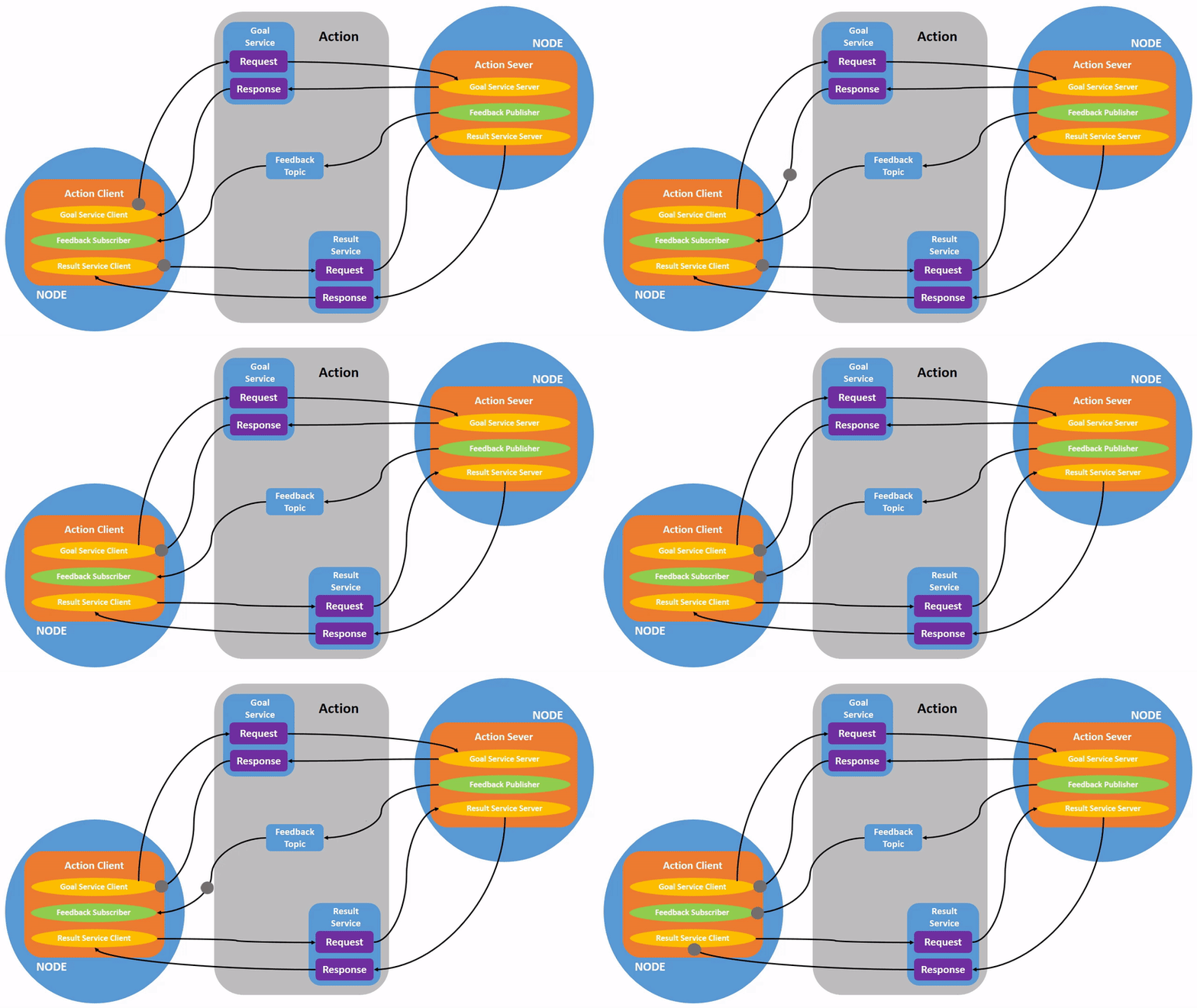
- Services
- Take input request and execute an action
- Provide only one response to the client (possibly even before the task is completed)
- Subscribers and Publishers
- Continuously look for incoming messages and take up more compute resources
- Require two different unambiguous topics for the subscriber and publisher
- Actions
- Like services they only start execution (in an execute_callback)
- Can provide response on input acceptance (goal_handle.accept())
- Can provide continuous feedback when the task is being executed (goal_handle.publish_feedback())
- Can provide final success/failure completion response after the task has ended
- All above communication is defined in a
.actionfile
- Like services they only start execution (in an execute_callback)
Basic Skeleton of an Action Server and Client
The ROS2 documentation has simple implementation shown below
Action Server
from action_tutorials_interfaces.action import Fibonacci

class FibonacciActionServer(Node):

    def __init__(self):
        super().__init__('fibonacci_action_server')
        self._action_server = ActionServer(
            self,
            Fibonacci, # filename in action folder (Fibonacci.action)
            'fibonacci', # name which shows up when we do `ros2 action list`
            self.execute_callback # callback when runs when client requests server
            )

    def execute_callback(self, goal_handle):
        self.get_logger().info('Executing goal...')

        feedback_msg = Fibonacci.Feedback()
        feedback_msg.partial_sequence = [0, 1]

        for i in range(1, goal_handle.request.order):
            feedback_msg.partial_sequence.append(
                feedback_msg.partial_sequence[i] + feedback_msg.partial_sequence[i-1])
            self.get_logger().info('Feedback: {0}'.format(feedback_msg.partial_sequence))
            goal_handle.publish_feedback(feedback_msg)
            time.sleep(1)

        goal_handle.succeed()

        result = Fibonacci.Result()
        result.sequence = feedback_msg.partial_sequence
        return result

def main(args=None):
    rclpy.init(args=args)

    fibonacci_action_server = FibonacciActionServer()

    rclpy.spin(fibonacci_action_server)


if __name__ == '__main__':
    main()
Action Client
from action_tutorials_interfaces.action import Fibonacci

class FibonacciActionClient(Node):

    def __init__(self):
        super().__init__('fibonacci_action_client')
        self._action_client = ActionClient(self, Fibonacci, 'fibonacci')

    def send_goal(self, order):
        goal_msg = Fibonacci.Goal()
        goal_msg.order = order

        self._action_client.wait_for_server()

        self._send_goal_future = self._action_client.send_goal_async(goal_msg, feedback_callback=self.feedback_callback)

        self._send_goal_future.add_done_callback(self.goal_response_callback)

    def goal_response_callback(self, future):
        goal_handle = future.result()
        if not goal_handle.accepted:
            self.get_logger().info('Goal rejected :(')
            return

        self.get_logger().info('Goal accepted :)')

        self._get_result_future = goal_handle.get_result_async()
        self._get_result_future.add_done_callback(self.get_result_callback)

    def get_result_callback(self, future):
        result = future.result().result
        self.get_logger().info('Result: {0}'.format(result.sequence))
        rclpy.shutdown()

    def feedback_callback(self, feedback_msg):
        feedback = feedback_msg.feedback
        self.get_logger().info('Received feedback: {0}'.format(feedback.partial_sequence))
Handling Asynchronous Tasks
The above action servers perform simple tasks within a while loop and everything in the node runs in the same thread. However, let’s consider a specific example to understand ‘asynchronosity’
Example: Build an Action Server that commands a robot
Specifically:
- The action server takes inputs from a client
- the action server requests a downstream node (which is also an action server) to navigate
- When downstream node is performing the task, we need to transmit feedback to user
- Only after downstream node has completed it’s action, we can return success/failure to user
The main pain points above are:
- Waiting for downstream nodes to complete a task
- Relaying feedback when waiting
We’ll call this node MissionControl Node in line with the example. Additionally, the downstream action server we are communicating with is called StateMachine
Naive Approach
class MissionControlActionServer(Node):

    def __init__(self):
        super().__init__('mission_control_action_server')
        self.get_logger().info("Starting State Machine Action Server")

        self.declare_parameter('robot_namespace_param', 'robot')
        robot_namespace = self.get_parameter('robot_namespace_param').get_parameter_value().string_value
        self.get_logger().info(f"robo2 namespace is {robot_namespace}")

        action_server_name = "MissionControl"
        self.get_logger().info(f"Mission Control Machine Action Server Name is {action_server_name}")
        robot_state_machine_name = robot_namespace + "/StateMachine"
        self.get_logger().info(f"robot StateMachine Server being used for client is {robot_state_machine_name}")

        # Construct the action server
        self._action_server = ActionServer(
            self,
            MissionControl,
            action_server_name,
            self.execute_callback,)

        # Construct the action client (node and name should be same as defined in action server)
        self._robot_state_machine_client = ActionClient(self, StateMachine, robot_state_machine_name)

    ############# Pose Subscribers ########################
        robot_map_pose_topic = robot_namespace + "/map_pose"

        self._robot_pose_subscriber = self.create_subscription(
            PoseWithCovarianceStamped,
            robot_map_pose_topic,  # Topic on which pose is being relayed
            self._robot_pose_callback,
            10  # Adjust the queue size as needed
        )

    def _robot_pose_callback(self, msg):
        self._robot_latest_pose = msg
    #! ######################################################

    def get_final_result(self, success_status):
        result = MissionControl.Result()
        result.success = success_status
        return result

    def publish_mission_control_feedback(self):
        # check if both robot1 and robot1 feedback has arrived:
        if self._robot_input_feedback_pose and self._robot_input_feedback_state:
            # publish feedback to high level action servers
            output_feedback_msg = MissionControl.Feedback()
            output_feedback_msg.pose_feedback = self._robot_input_feedback_pose
            output_feedback_msg.state_feedback = self._robot_input_feedback_state
            self._mission_control_goal_handle.publish_feedback(output_feedback_msg)

    ########## Send Goals to Individual Robots ################################################

    def robot_send_goal(self, robot_goal_package):
        self.get_logger().info('Calling Robot Action Server...')

        try:
            self._robot_state_machine_client.wait_for_server(timeout_sec=5)
        except:
            self.get_logger().error('Timeout: Action server not available, waited for 5 seconds')
            return

        self._send_goal_future = self._robot_state_machine_client.send_goal_async(
                                        robot_goal_package,
                                        feedback_callback=self.robot_client_feedback_callback)
        self._send_goal_future.add_done_callback(self.robot_client_goal_response_callback)

    ########### robot Functions ##########################################################

    def robot_client_goal_response_callback(self, future):
        goal_handle = future.result()
        if not goal_handle.accepted:
            self.get_logger().warning('Robot 2 Goal rejected :(')
            return

        self.get_logger().info('Robot 2 Goal accepted :)')
        self._goal_accepted = True

        self._get_result_future = goal_handle.get_result_async()
        self._get_result_future.add_done_callback(self.robot_client_get_result_callback)

    def robot_client_get_result_callback(self, future):
        result = future.result().result # success/failure result from lower level action server
        return result

    def robot_client_feedback_callback(self, input_feedback_msg):
        # get feedback from low level action server
        self._robot_input_feedback_pose = input_feedback_msg.feedback.pose_feedback
        self._robot_input_feedback_state = input_feedback_msg.feedback.state_feedback
        self.get_logger().info(f'Received feedback: robot_ pos x={input_feedback_pose_x},\
                                 robot_ pos y = {input_feedback_pose_y}')
        self.get_logger().info(f'Received feedback: robot_ state={self._robot_input_feedback_state}')

        self.publish_mission_control_feedback()


    ############### MAIN LOOP START ################################################
    def execute_callback(self, goal_handle):
        """
        Each Robot Task will be split into Undocking -> Navigation -> Docking
        """
        self._mission_control_goal_handle = goal_handle

        # INPUT FROM USER
        dock_ids = goal_handle.request.robot_specific_dock_ids
        self.get_logger().info(f'Input dock IDs are {dock_ids}')

        end_goal_robot.header.stamp = self.get_clock().now().to_msg()
        # some mapping from dock_id to map_pose
        dock_to_map_pose = {}
        end_goal_robot.pose = dock_to_map_pose[dock_ids]

        # check to make sure we have current robot pose (robot 2)
        assert self._robot_latest_pose is not None
        start_goal_robot = PoseStamped()
        start_goal_robot.header = self._robot_latest_pose.header
        start_goal_robot.pose = self._robot_latest_pose.pose.pose

        robot_goal_package = StateMachine.Goal()
        robot_goal_package.start_dock_id = dock_ids[0]
        robot_goal_package.end_dock_id = dock_ids[1]

        self.robot_send_goal(robot_goal_package)
        self.get_logger().info('Got result')

        # potentially add a time.sleep()

        goal_handle.succeed()
        return self.get_final_result(True)


def MissionControlServer(args=None):
    rclpy.init(args=args)
    print("ARGS IS", args)
    # start the Action Server
    mission_control_action_server = MissionControlActionServer()
    rclpy.spin(mission_control_action_server)

if __name__ == '__main__':
    MissionControlServer()
The above action server is going to have the following issues:
- It will return success to user almost immediately as it will not wait for low level action server result to come in
- If we weret to add a time.sleep() as commented in the code, we may get the low level action server result, but we the execute_callback thread will block the entire node (including any other subscriber like the map_pose subscriber)
- It effectively becomes a service :/
Solution
To be able to block one function’s execution while keeping other functions unblocked, we need to do the following:
- Make the execute callback thread separate from the ROS node
- Create events which allow us to block execution
We can make the callback a separate thread (or a thread which can be re-entered in our case) by assiging only the callback to a ‘callback group’. We have two options for such a callback group:
- ReentrantCallbackGroup
- MutuallyExclusiveCallbackGroup
Both achieve the functionality we require above. However, each ROS node is also generally equipped to only run one thread. To allow it to run multiple threads, we use ‘MultiThreadedExecutors’
Finally, to block function execution, we use threading.Event(), which is not a ROS trick but just a python feature.
Here’s a new version of the same node which can now handle async tasks
from rclpy.callback_groups import ReentrantCallbackGroup, MutuallyExclusiveCallbackGroup
from rclpy.executors import MultiThreadedExecutor
from threading import Event

class MissionControlActionServer(Node):

    def __init__(self):
        super().__init__('mission_control_action_server')
        self.get_logger().info("Starting State Machine Action Server")

        robot_namespace = "/"

        action_server_name = "MissionControl"
        self.get_logger().info(f"Action Server Name is {action_server_name}")

        # define the low level action server for which this node is a client
        robot_state_machine_name = robot_namespace + "/StateMachine"

        # Define the callback group to make executor run on a separate thread
        self.callback_group = ReentrantCallbackGroup()
        # Construct the action server
        self._action_server = ActionServer(
            self,
            MissionControl,
            action_server_name,
            self.execute_callback,
            callback_group=self.callback_group
            )

        # Construct the action client (node and name should be same as defined in action server)
        self._robot_state_machine_client = ActionClient(self, StateMachine,
                                                        robot_state_machine_name)

        # Create an instance of the Event class and set it's internal blocking to active
        self._robot_action_complete = Event()
        self._robot_action_complete.clear() # event cleared/not_set = blocking

    ############# Pose Subscribers ########################
        robot_map_pose_topic = robot_namespace + "/map_pose"

        self._robot_pose_subscriber = self.create_subscription(
            PoseWithCovarianceStamped,
            robot_map_pose_topic,  # Topic on which pose is being relayed
            self._robot_pose_callback,
            10  # Adjust the queue size as needed
        )

    def _robot_pose_callback(self, msg):
        self._robot_latest_pose = msg
    #! ######################################################

    def get_final_result(self, success_status):
        result = MissionControl.Result()
        result.success = success_status
        return result

    def publish_mission_control_feedback(self):
        # check if both robot1 and robot1 feedback has arrived:
        if self._robot_input_feedback_pose and self._robot_input_feedback_state:
            # publish feedback to high level action servers
            output_feedback_msg = MissionControl.Feedback()
            output_feedback_msg.pose_feedback = self._robot_input_feedback_pose
            output_feedback_msg.state_feedback = self._robot_input_feedback_state
            self._mission_control_goal_handle.publish_feedback(output_feedback_msg)

    ########## Send Goals to Individual Robots ################################################

    def robot_send_goal(self, robot_goal_package):
        self.get_logger().info('Calling Robot Action Server...')

        try:
            self._robot_state_machine_client.wait_for_server(timeout_sec=5)
        except:
            self.get_logger().error('Timeout: Action server not available, waited for 5 seconds')
            return

        self._send_goal_future = self._robot_state_machine_client.send_goal_async(
                                        robot_goal_package,
                                        feedback_callback=self.robot_client_feedback_callback)
        self._send_goal_future.add_done_callback(self.robot_client_goal_response_callback)

    ########### robot Functions ##########################################################

    def robot_client_goal_response_callback(self, future):
        goal_handle = future.result()
        if not goal_handle.accepted:
            self.get_logger().warning('Robot 2 Goal rejected :(')
            return

        self.get_logger().info('Robot 2 Goal accepted :)')
        self._goal_accepted = True
        self._get_result_future = goal_handle.get_result_async()
        self._get_result_future.add_done_callback(self.robot_client_get_result_callback)

    def robot_client_get_result_callback(self, future):
        result = future.result().result # success/failure result from lower level action server
        self.get_logger().info(f'Robot Result: {result}')
        if result is True:
            self.get_logger().info(f"Robot Goal Reached")
            self._robot_mission_success = True # used to give mission success respose upstream
            self._robot_action_complete.set() # sets the Event class to be complete
        else:
            self._robot_mission_success = False # used to give mission failure respose upstream
            self.get_logger().error(f"Robot Goal Not Reached!")
            self._robot_action_complete.set() # sets the Event class to be complete

    def robot_client_feedback_callback(self, input_feedback_msg):
        # get feedback from low level action server
        self._robot_input_feedback_pose = input_feedback_msg.feedback.pose_feedback
        self._robot_input_feedback_state = input_feedback_msg.feedback.state_feedback
        self.get_logger().info(f'Received feedback: robot_ pos x={input_feedback_pose_x},\
                                 robot_ pos y = {input_feedback_pose_y}')
        self.get_logger().info(f'Received feedback: robot_ state={self._robot_input_feedback_state}')

        self.publish_mission_control_feedback()


    ############### MAIN LOOP START ################################################
    def execute_callback(self, goal_handle):
        """
        Each Robot Task will be split into Undocking -> Navigation -> Docking
        """
        self._mission_control_goal_handle = goal_handle

        # INPUT FROM USER
        dock_ids = goal_handle.request.robot_specific_dock_ids
        self.get_logger().info(f'Input dock IDs are {dock_ids}')

        end_goal_robot.header.stamp = self.get_clock().now().to_msg()
        # some mapping from dock_id to map_pose
        dock_to_map_pose = {}
        end_goal_robot.pose = dock_to_map_pose[dock_ids]

        # check to make sure we have current robot pose (robot 2)
        assert self._robot_latest_pose is not None
        start_goal_robot = PoseStamped()
        start_goal_robot.header = self._robot_latest_pose.header
        start_goal_robot.pose = self._robot_latest_pose.pose.pose

        robot_goal_package = StateMachine.Goal()
        robot_goal_package.start_dock_id = dock_ids[0]
        robot_goal_package.end_dock_id = dock_ids[1]

        ######### Give Goals to robot and wait ###########
        self._robot_action_complete.clear()

        self.robot_send_goal(robot_goal_package)

        self._robot_action_complete.wait() # This is what blocks execution of this thread
        self.get_logger().info('Got result')

        goal_handle.succeed()

        if self._robot_mission_success:
            self.get_logger().info("Returning Success")
            return self.get_final_result(True)
        else:
            return self.get_final_result(False)


def MissionControlServer(args=None):
    rclpy.init(args=args)
    # Define the MultiThreadedExecutor() to allow multiple threads in above node
    executor = MultiThreadedExecutor()
    mission_control_action_server = MissionControlActionServer()
    rclpy.spin(mission_control_action_server, executor)

if __name__ == '__main__':
    MissionControlServer()